
«Как известно, детское любопытство неистощимо и находит в себе обильную пищу даже там, где, кажется, уж решительно ничего нельзя найти. Например, какой интерес может представлять собой пустырь, поросший бурьяном и крапивой? Даже неприхотливые городские козлы не считали нужным сюда заглядывать, а...
he Republic (Greek: Πολιτεία, Politeia; Latin: Res Publica) is a Socratic dialogue, written by Plato around 375 BC, concerning justice (δικαιοσύνη), the order and character of the just city-state, and the just man. It is Plato's best-known work, and has proven to be one of the world's...
Plato was a philosopher in Classical Greece and the founder of the Academy in Athens, the first institution of higher learning in the Western world. He is widely considered the most pivotal figure in the development of philosophy, especially the Western tradition. Unlike nearly all of Plato's...
The Symposium (Ancient Greek: Συμπόσιον, Sympósion [sympósi̯on]) is a philosophical text by Plato dated c. 385–370 BC. It depicts a friendly contest of extemporaneous speeches given by a group of notable men attending a banquet. The men include the philosopher Socrates, the general and political...
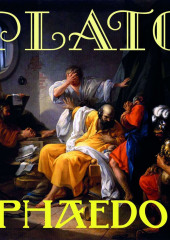
Phædo or Phaedo (Greek: Φαίδων, Phaidōn), also known to ancient readers as On The Soul, is one of the best-known dialogues of Plato's middle period, along with the Republic and the Symposium. The philosophical subject of the dialogue is the immortality of the soul. It is set in the last hours...
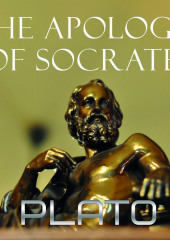
The Apology of Socrates was written by Plato. In fact, it’s a defensive speech of Socrates that he said in a court noted down by Plato. The main subject of the speech is a problem of the evil. Socrates insists that neither death nor death sentence is evil. We shouldn’t be afraid of the death...
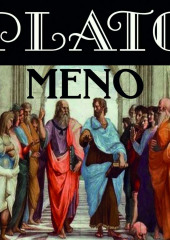
Meno (Greek: Μένων, Menōn) is a Socratic dialogue scripted by Plato. It appears to attempt to determine the definition of virtue, or arete, meaning virtue in general, rather than particular virtues, such as justice or temperance. The first part of the work is written in the Socratic dialectical...
Lysis (Greek: Λύσις), is a dialogue of Plato which discusses the nature of philia (φιλία), often translated as friendship, while the word's original content was of a much larger and more intimate bond. It is generally classified as an early dialogue. The main characters are Socrates, the boys...
The Laches (Greek: Λάχης) is a Socratic dialogue written by Plato. Participants in the discourse present competing definitions of the concept of courage. Laches – Athenian general and statesman, son of Melanopus. Famous dialogues of Plato – Early: Apology, Charmides, Crito, Ion, Euthyphro, Hippias...
The Allegory of the Cave, or Plato's Cave, was presented by the Greek philosopher Plato in his work Republic (514a–520a) to compare «the effect of education (παιδεία) and the lack of it on our nature». It is written as a dialogue between Plato's brother Glaucon and his mentor Socrates,...
The Menexenus (Greek: Μενέξενος) is a Socratic dialogue of Plato, traditionally included in the seventh tetralogy along with the Greater and Lesser Hippias and the Ion. The speakers are Socrates and Menexenus, who is not to be confused with Socrates' son Menexenus. The Menexenus of...
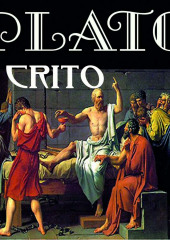
Crito (Ancient Greek: Κρίτων [krítɔːn]) is a dialogue by the ancient Greek philosopher Plato. It depicts a conversation between Socrates and his wealthy friend Crito regarding justice (δικαιοσύνη), injustice (ἀδικία), and the appropriate response to injustice. Socrates thinks that injustice may not...
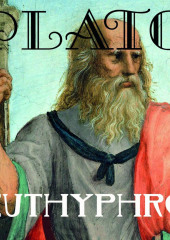
Euthyphro (Ancient Greek: Εὐθύφρων, romanized: Euthyphrōn; c. 399–395 BC), by Plato, is a Socratic dialogue whose events occur in the weeks before the trial of Socrates (399 BC), between Socrates and Euthyphro. The dialogue covers subjects such as the meaning of piety and justice. The Euthyphro...

«Если бы какую-нибудь хилую, чахоточную наездницу на кляче месяцами без перерыва гонял бичом перед неутомимой публикой по кругу манежа безжалостный хозяин, заставляя ее вертеться на лошади, посылать воздушные поцелуи…»

«Одни говорят, что слово „одрадек“ славянского корня и пытаются на основании этого объяснить образование данного слова. Другие считают, что слово это немецкого происхождения, но испытало славянское влияние. Неуверенность обоих толкований приводит, однако, к справедливому, пожалуй, заключению, что...

«…Материал для наблюдения, как распространялся и действовал „Сеничкин яд“ в тридцатых годах нашего столетия, мы находим в записках магистра 2-го курса московской духовной академии и профессора вифанской семинарии, а впоследствии синодального секретаря Филиппа Филипповича Исмайлова, драгоценнейшею...

Замысел повести «Человек из ресторана» (1911), по словам автора, русского писателя Ивана Сергеевича Шмелева (1918-1950) – выявить слугу человеческого, который по своей специфической деятельности как бы в фокусе представляет всю массу слуг на разных путях жизни. Действующие лица повести образуют...

«При строительстве вавилонской башни все было сначала более или менее в порядке…»

«Мы пятеро друзей, мы вышли однажды друг за дружкой из одного дома…»

The Lees of Happiness – one of the stories, which entered in a collection of eleven short stories by F. Scott Fitzgerald «Tales of the Jazz Age» (1922). The Lees of Happiness is a was first published in the «Chicago Tribune,» and first published in book form in. A newlywed young woman named...
Показать ещё